Showing posts with label Social Media Marketing. Show all posts
Showing posts with label Social Media Marketing. Show all posts
Monday, December 7, 2015
DreamChaser PMU Horse Rescue and Rehabilitation Social Media Campaign
Here is a project I worked on for DreamChaser Horse Rescue and Rehabilitation

Tuesday, November 3, 2015
Social Listening
As I have previously mentioned, it's important to get content out onto social media. It is also important to monitor social media and listen to what people are saying. By listening to social media, you can find out what people are saying about a brand, gauge the health of a brand online, analyze and track a brand, and identify conversations of crisis about a brand.
Perhaps the most important reason to monitor social media is to catch a crisis early. Thanks to the internet and social media, a crisis can escalate out of control in just a matter of a few hours.
Ignoring social media, especially during a PR crisis can lead to large losses for a company. In 2013, Target loss favor of many customers because it did not act very quickly when their data on customers was breached.
Even two years later, in 2015, target still has a very extensive FAQs page about the breach on their corporate website.

PR Crisis are going to happen, but companies can reduce their effects by monitoring social media. The time to respond to a crisis is reduced, but customers also have acess to a company though the internet. The best way to combat a PR crisis is to admit to the mistake, formulate a plan, and then tell consumers what you plan to do.
The types of media concerned with social media monitoring and listening is
- Owned media includes social media pages that your company controls, like Facebook, Twitter, a blog, or company website.
- Earned media is media that comes from people starting conversations, it's everything else that is not company owned and operated.
Tools that can be used to monitor social media include Omniture, Google Analytics, Facebook Insights, Radian 6,
Perhaps the most important reason to monitor social media is to catch a crisis early. Thanks to the internet and social media, a crisis can escalate out of control in just a matter of a few hours.
Ignoring social media, especially during a PR crisis can lead to large losses for a company. In 2013, Target loss favor of many customers because it did not act very quickly when their data on customers was breached.
Even two years later, in 2015, target still has a very extensive FAQs page about the breach on their corporate website.

PR Crisis are going to happen, but companies can reduce their effects by monitoring social media. The time to respond to a crisis is reduced, but customers also have acess to a company though the internet. The best way to combat a PR crisis is to admit to the mistake, formulate a plan, and then tell consumers what you plan to do.
Thursday, October 22, 2015
My First posts using Hootsuite
In my previous post, I discussed using Hootsuite to post to multiple social media websites. I thought I posted the post, but I'm realizing now that I forgot to actually click schedule.
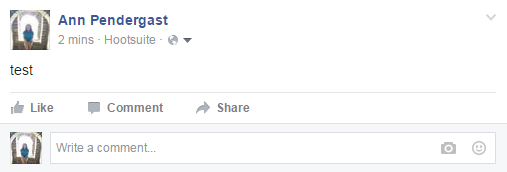
So this is my take two attempt. For this one, I wrote "test" into the post box and instead of scheduling the post, I posted immediately by hitting "send now" option.
Here are the results:
Facebook Post
Twitter Post

LinkedIn Post

To view a post on Linkedin, you have to hover over "profile" at the top, then scroll down to "your updates."
I have to play around with Hootsuite to become more efficient and proficient at it, but I made my first post! The biggest benefit is time and effort saved when you post to multiple websites at once. You do not have to log in to 3+ social media sites to post, you just need to connect them to your hootsuite and then Viola, you can post!
Tuesday, October 20, 2015
Using Hootsuite to post to multiple Social Media Sites
Hootsuite can act as a hub for all on one's social media accounts. This can also work really well for a company's for that matter. Users can post content to multiple social networks at once and schedule ahead of time to post.

This screenshot from Hootsuite.com shows what the free Hootsuite account includes
For example, I linked my Facebook account, my LinkedIn, and my twitter to my LinkedIn.


This screenshot from Hootsuite.com shows what the free Hootsuite account includes
The free version allows you to post on up to three social media networks at once. At any time however, you get to choose which social networks are posting content.
For example, I linked my Facebook account, my LinkedIn, and my twitter to my LinkedIn.
In addition, you can track various aspects on Social media. For example, I created a stream that allows me to track anytime my username "AnnieP122" comes up on twitter. I do not have a large presence on Twitter, but here's an example of a post that appeared in my twitter stream for my username.
What I am looking forward to most is the ability to schedule posts. Content can be created in advance and then scheduled to be posted in the future. This way you can schedule a post marking the 25th anniversary gala of an organization you work a month in advanced. In addition you can schedule regular posts leading up and providing more information about the actual 24th anniversary gala creating buzz with limited work and need to constantly remember to post every few days.

Here is my first Hootsuite post. I scheduled it to be posted at 11 am and to be posted to my Facebook and my twitter.
Thursday, October 15, 2015
Achieving Credibility on the internet, Is it all about Aesthetics?
Achieving credibility on the internet is just as complicated than achieving credibility in person. In a way however, achieving credibility between the two are very similar. A Stanford study by Stanford Web Credibility Research found that design of a website had the highest affect on credibility. Aesthetics are very important when it comes to websites. This applies to the real world because if you do not look presentable or like you "fit" whatever job or idea you are presenting, it's much harder to gain an audiences trust. If I saw a person dressed as bozo the clown discussing astrophysics, I would be very confused. Table 1 below shows other parts of a digital website that affect its credibility. The actual content of the website including motive of the company and information are the next important part. In the grand scheme of things, Aesthetics superficially of the website and the way content is presented are important in a consumers experience with a website.

(Fogg et al., 2003).
I think it's worth pointing out that at this point in time, this study is indeed a little dated. I would argue that it is still relevant because the extent to which we use the internet has changed, but we still prefer websites that look clean, professional, have good content, and are easy to read.
If would like to reference the full article,
Tuesday, October 13, 2015
LinkedIn- Yes, It can help you meet people and find a job!
LinkedIn can be applied both to an individual hunting for a job, but also to businesses and brands pushing their products and services. Having a strong individual presence on LinkedIn can also help in establishing a presence for a business or company.
Important things to do on LinkedIn
- build your own network!
- use LinkedIn to aid in finding work
- Create and join LinkedIn groups
- Add examples of projects to expand your LinkedIn portfolio
- make posts and provide updates
Don't abandon your profile on LinkedIn! It's a representation of you and should show your product. If you manage a LinkedIn page for a company, it will likely link to your profile.
One thing to note is that if you're trying to create a LinkedIn profile for a company, you should have an official website and a company e-mail address. LinkedIn also allows for businesses to create advertisements.
The best way to understand LinkedIn is by using it! For that reason, I finally added a profile picture to my LinkedIn and am in the process of updating it and expanding my network.

The best way to keep a LinkedIn account updated and accurate is to schedule time in intervals like once a week for 20 minutes or even 30 minutes a month.
So, go try to make a LinkedIn and see what connections you can find!

A well updated Linkedin should include:
- A summary of who you are
- work experience
- volunteer experience
- Links to projects to create a digital portfolio.
- skills
- connections
- endorsements
So, go try to make a LinkedIn and see what connections you can find!
Thursday, October 8, 2015
How active should a company be on social media?
Social media seems to revolve around the idea of getting more followers and deciding what and how much to share with your followers. Social media frequency strives to find how often posts should be made on social media. I admittedly try to keep a distance from social media in my personal life and don't post too often. That being said this is a caveat when posting-- it's hard to tell how many people your posts are actually reaching. Moreover, posting too often could lead to saturation with diminishing returns.

An article on by buffer you can find here attempts to quantify how much we should be posting on social media. It seems to be a common theme that posting on social media consistently is important.
I'm a little skeptical about the suggestions for ideal number of posts per day. The stats are interesting, but they are also from 2013 they also seem to focus on top brands and companies. Buffer's best practices include a certain amount of posts until engagement with an audience begins to drop and taper out. I feel like this in theory sounds like a good starting point, but it might not be as applicable to a completely new company as it does to an already established company. Companies also begin to see diminishing returns after a certain amount of posts. For example in a 2012 study by Track Social, researchers found that after three tweets engagement begins to decrease.
I like that all of the data to find frequency of social media and it's effects is so readily available, but I feel like in some cases maybe variables need to be controlled for a little more to avoid confounding factors. In this article there is some detail about the methods and parameters used, but not all that much.
In my opinion it comes down to finding out what works for ones company. There is no single or proper way to do social media. If there was, we would all be experts. In reality, the world is always changing and so is social media. It's unrealistic to be one person and have pages on all platforms that are kept active and up to date. It's more important to find out what platforms work to best reach your audience and what's the optimal activity level for your specific audience.

An article on by buffer you can find here attempts to quantify how much we should be posting on social media. It seems to be a common theme that posting on social media consistently is important.
I'm a little skeptical about the suggestions for ideal number of posts per day. The stats are interesting, but they are also from 2013 they also seem to focus on top brands and companies. Buffer's best practices include a certain amount of posts until engagement with an audience begins to drop and taper out. I feel like this in theory sounds like a good starting point, but it might not be as applicable to a completely new company as it does to an already established company. Companies also begin to see diminishing returns after a certain amount of posts. For example in a 2012 study by Track Social, researchers found that after three tweets engagement begins to decrease.
I like that all of the data to find frequency of social media and it's effects is so readily available, but I feel like in some cases maybe variables need to be controlled for a little more to avoid confounding factors. In this article there is some detail about the methods and parameters used, but not all that much.
In my opinion it comes down to finding out what works for ones company. There is no single or proper way to do social media. If there was, we would all be experts. In reality, the world is always changing and so is social media. It's unrealistic to be one person and have pages on all platforms that are kept active and up to date. It's more important to find out what platforms work to best reach your audience and what's the optimal activity level for your specific audience.
Thursday, October 1, 2015
Facebook Advertisements
Facebook adds are an useful marketing tool and can be used to advertise a blog, website, or Facebook page.
Facebook adds can appear in one's news-feed directly or on the right side of the Facebook page.

An advertisement that appeared directly in my news feed

An advertisement that was on the right side of my Facebook news-feed
Facebook as mentioned in previous posts, provides data! This holds true with their advertising options. You can see how many people the add was displayed to (reach), how many people actually clicked on the add, the click through rate ( percent of people who clicked the add out of total), The extra data may be interesting, but what's really important is how many people are clicking on the advertisement. As a marketer, you want people to see the add, and follow the link to find more information about the product. If no one is clicking on your advertisement, you are not getting any return on investment.
You can also make multiple adds and use Facebook data to figure out which adds are more effective.
Who is your audience? A central idea of marketing is finding a target market. Facebook ads can be targeted towards a particular audience, where theoretically they should perform better. In order to target an audience, chose people who express an interest related to what you're advertising. For example, an ecology blog may be geared to people who have shown at interest in natural sciences.
The fun stuff is actually creating the campaign.
Facebook adds can appear in one's news-feed directly or on the right side of the Facebook page.

An advertisement that appeared directly in my news feed
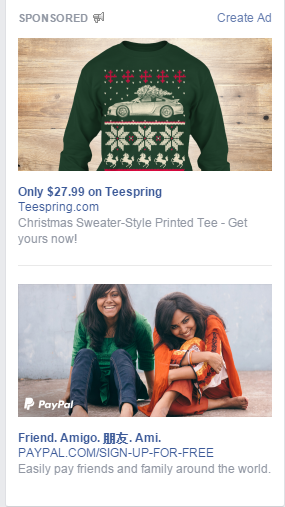
An advertisement that was on the right side of my Facebook news-feed
Facebook as mentioned in previous posts, provides data! This holds true with their advertising options. You can see how many people the add was displayed to (reach), how many people actually clicked on the add, the click through rate ( percent of people who clicked the add out of total), The extra data may be interesting, but what's really important is how many people are clicking on the advertisement. As a marketer, you want people to see the add, and follow the link to find more information about the product. If no one is clicking on your advertisement, you are not getting any return on investment.
You can also make multiple adds and use Facebook data to figure out which adds are more effective.
Who is your audience? A central idea of marketing is finding a target market. Facebook ads can be targeted towards a particular audience, where theoretically they should perform better. In order to target an audience, chose people who express an interest related to what you're advertising. For example, an ecology blog may be geared to people who have shown at interest in natural sciences.
The fun stuff is actually creating the campaign.
- Go to www.facebook.com/advertising
- Click create add
- Choose what kind of results you want to receive depending on what kind of add you are making. Page likes (with adds linking to Facebook pages) and clicks to external websites are likely to stay consistent and relevant overtime even as Facebook changes)
- Follow the prompt to enter your website or page you want to advertise
- Identify your audience through location, age, gender, language, and interests. The interest sections allows to really hone in on one specific audience.
- Fill out your account and campaign information. This is where you disclose your country, currency, time zone, advertisement schedule and budget over time. Set a start and end date so to your campaign! This gives you a dollar amount as to how much you're spending on a campaign
- Facebook bidding allows for Facebook to bid on on adds for you.If you select optimize for clicks, facebook will choose add placement that gets you the most clicks and you're price you pay may go up or down depending on how many clicks you get.
- You can upload an image for ads. These can be digital images or images made in Photoshop. Content continues to be important in marketing!
- Select a headline and text for your advertisement
- Choose if you add appears to desktop users and mobile users
- Monitor your campaign over time with Facebook's provided analysis
Tuesday, September 22, 2015
Making a Facebook Business or Product Page
Since everyone from 13 year old kids to my neighbor's grandmother are on Facebook, it's no surprise that businesses create Facebook pages to reach out to possible clients. Facebook pages are like having a website within a larger website (Facebook). Owners can post text, pictures, videos, etc.
Theoretically, if someone likes a Facebook page, They should be getting notifications from the page when there is a new post. In the old days, this was true. These days, Facebook charges money to boost reach of posts to an audience.

One thing to consider before making a Facebook is whether or not it's worth it. Is the ROI ( return on investment) worth it? I personally have the motto that if you have it out there, you're more likely get an interest than if you didn't have a Facebook at all. But also, if you don't post on your Facebook page, you will not have worthwhile interactions either. It's easy to forget that Facebook is business that makes money from advertisement rather than just allows you to link up with friends, family, businesses, products, and ideas that interest you. I f you want to increase your presence, you can pay money to "boost" your post or reach more people.
Here's a link to the Facebook page I made for the sake of practicing making one. I chose to make a photo blog like page. At this point, the page is pretty boring. It's blank, gray, and undeveloped.
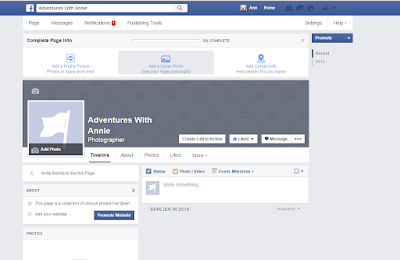
I still need to complete filling out my profile. When I eventually do, I can fill my page with content so people are interested in visiting it. For me, this will probably be bad iPhone photography, but that's okay. At this point, it's just an experiment whose outcomes can be applied to real world idea marketing.
If you have a business, product, or idea you want to share with the world, I suggest you go do it. Try making a Facebook page. If you don't like it, you can always delete it.
Theoretically, if someone likes a Facebook page, They should be getting notifications from the page when there is a new post. In the old days, this was true. These days, Facebook charges money to boost reach of posts to an audience.

If you already have a personal Facebook, making a Facebook page is easy!
- Log into your personal Facebook page
- Go to facebook.com/pages/create.
- Choose whether you're creating a page for a local business or place, a company, organization, or institution, a brand, a product, a artist, band, or public figure, for entertainment purposes, or a cause or community.
The next steps are relatively self explanatory. Follow the prompts on the screen to create your snazzy new page. Eventually, you will want to add a profile picture, a cover photo, and more detail about your page.
One thing to consider before making a Facebook is whether or not it's worth it. Is the ROI ( return on investment) worth it? I personally have the motto that if you have it out there, you're more likely get an interest than if you didn't have a Facebook at all. But also, if you don't post on your Facebook page, you will not have worthwhile interactions either. It's easy to forget that Facebook is business that makes money from advertisement rather than just allows you to link up with friends, family, businesses, products, and ideas that interest you. I f you want to increase your presence, you can pay money to "boost" your post or reach more people.
Here's a link to the Facebook page I made for the sake of practicing making one. I chose to make a photo blog like page. At this point, the page is pretty boring. It's blank, gray, and undeveloped.

I still need to complete filling out my profile. When I eventually do, I can fill my page with content so people are interested in visiting it. For me, this will probably be bad iPhone photography, but that's okay. At this point, it's just an experiment whose outcomes can be applied to real world idea marketing.
If you have a business, product, or idea you want to share with the world, I suggest you go do it. Try making a Facebook page. If you don't like it, you can always delete it.
Tuesday, September 15, 2015
The importance of Content!
When it comes to content I've assumed that companies create content and send it out into the world. I did not really consider they could curate content that already exists to raise awareness of their business. I admit, I probably prefer creating content because it's unique and interesting. It seems like unique content may have a larger impact for a company because it is personally tailored.
There also seems to be a way to combine content. This comes about through collaboration with other companies! I think it's pretty interesting to see the twitter conversations between brands. The person that writes the taco bell twitter has some pretty funny stuff! From a marketing perspective these short less than 140 character exchanges can provide a boost for both brands involved!

So, the big question when it comes to content is, Where do you put it?
There are a variety of place to put content. You can even link content together on different social media channels.Some main ways to create content are the following: First, by curating a blog (Like this one!). Another way is by creating a website (yes, a blog is technically a website, but websites can cater to different needs that blogs do not traditionally do.) A website for example, can act as a carefully curated portfolio. Photos and videos are another great source of content. Thanks to smart phones and new technologies, taking photos and videos to make content is incredibly easy.
There also seems to be a way to combine content. This comes about through collaboration with other companies! I think it's pretty interesting to see the twitter conversations between brands. The person that writes the taco bell twitter has some pretty funny stuff! From a marketing perspective these short less than 140 character exchanges can provide a boost for both brands involved!
So, the big question when it comes to content is, Where do you put it?
There are a variety of place to put content. You can even link content together on different social media channels.Some main ways to create content are the following: First, by curating a blog (Like this one!). Another way is by creating a website (yes, a blog is technically a website, but websites can cater to different needs that blogs do not traditionally do.) A website for example, can act as a carefully curated portfolio. Photos and videos are another great source of content. Thanks to smart phones and new technologies, taking photos and videos to make content is incredibly easy.
Tuesday, September 8, 2015
Week 2- Introduction to Social Media Marketing
Social media can be overwhelming and difficult to understand. Posts are made on a variety of different channels. Social media does not coincide with one specific platform. This can be demonstrated by a simple google search. If you type Social Media marketing into a google image search you get this:

The search is full of info-graphics showing different platforms linking companies and people through the internet. If you're optimistic, this will lead to increased interaction between businesses and consumers to make revenue.
Revenue is important! The use of social media for it to be beneficial needs to give an ROI, or a return on investment. Return on investment is important because without a return, no money is made, and a social media marketing employer cannot be paid. Also, a misstep in social media usage can lead to people feeling negative towards a company or product and not using it overall.
An important idea to consider is that social media does not just appeal to consumers. I had not really thought about this in too much detail before reading this chapter. B2B is an acronym used for business to business oriented marketing. It is aimed at selling a product or service to another business. Social media works great for interacting with businesses that you likely wouldn't have even heard of before the internet age. B2C, or business to consumer is aimed at giving consumers information about a product. Consumers can be every all around the world and can instantly get updates from you on their Facebook feed, twitter page, or many other social media platforms. Engaging the consumer is a very important part of social media marketing. Businesses wants to get their audience talking about the product. This does run as a two way street however. Businesses should be listening to the word of mouth (WOM) exchanges between consumers. As mentioned in the previous post, SocialMention.com is a great way to gauge how people feel about a company on various social media platforms. Knowing how to better cater to your consumer can largely increase your consumer base.
The main idea of social media marketing is to make content catered to your audience and send it out into the world through a variety of channels such as Facebook, YouTube, and twitter. This will then create "buzz" about your company or its product and help your company grow.

The search is full of info-graphics showing different platforms linking companies and people through the internet. If you're optimistic, this will lead to increased interaction between businesses and consumers to make revenue.
Revenue is important! The use of social media for it to be beneficial needs to give an ROI, or a return on investment. Return on investment is important because without a return, no money is made, and a social media marketing employer cannot be paid. Also, a misstep in social media usage can lead to people feeling negative towards a company or product and not using it overall.
An important idea to consider is that social media does not just appeal to consumers. I had not really thought about this in too much detail before reading this chapter. B2B is an acronym used for business to business oriented marketing. It is aimed at selling a product or service to another business. Social media works great for interacting with businesses that you likely wouldn't have even heard of before the internet age. B2C, or business to consumer is aimed at giving consumers information about a product. Consumers can be every all around the world and can instantly get updates from you on their Facebook feed, twitter page, or many other social media platforms. Engaging the consumer is a very important part of social media marketing. Businesses wants to get their audience talking about the product. This does run as a two way street however. Businesses should be listening to the word of mouth (WOM) exchanges between consumers. As mentioned in the previous post, SocialMention.com is a great way to gauge how people feel about a company on various social media platforms. Knowing how to better cater to your consumer can largely increase your consumer base.
The main idea of social media marketing is to make content catered to your audience and send it out into the world through a variety of channels such as Facebook, YouTube, and twitter. This will then create "buzz" about your company or its product and help your company grow.
Subscribe to:
Posts (Atom)